 Kast Business Card
 Review: Team cashback, a costly Global upgrade

Kast Business Card can suit teams seeking USD cashback and employee spending controls. Standard pays uncapped 2% on eligible spending without an annual subscription. Global costs $10,000 annually; from 2027, its higher reward tier can only match that fee in extra cashback over Standard. Non-USD purchases carry an FX fee of up to 2%.
At a glance
| Feature | Kast Business Standard Card | Kast Business Global Card |
|---|---|---|
| Network and format | Visa; virtual and physical | Visa; virtual and physical |
| Annual subscription | $0 | $10,000 upfront; automatic renewal |
| USD cashback | Uncapped 2% on eligible business spending | From 2027: 3% on the first $1 million of annual eligible spending, then uncapped 2% |
| Physical card issuance | $40 plastic; $200 metal | $40 plastic; $200 metal |
| Non-USD purchase fee | Up to 2% | Up to 2% |
| Cross-border fee | 0% | 0% |
| Cards per business account | Up to 500 company and employee cards combined, subject to approval and issuer limits | Up to 500 company and employee cards combined, subject to approval and issuer limits |
| Markets | United States, United Arab Emirates, Brazil, United Kingdom and Australia | United States, United Arab Emirates, Brazil, United Kingdom and Australia |
| Verification | Company documents and proof of address; owner and controller checks | Proof of address; owner and controller checks |
Compare tiers
Pros & Cons
How Kast Business Card works
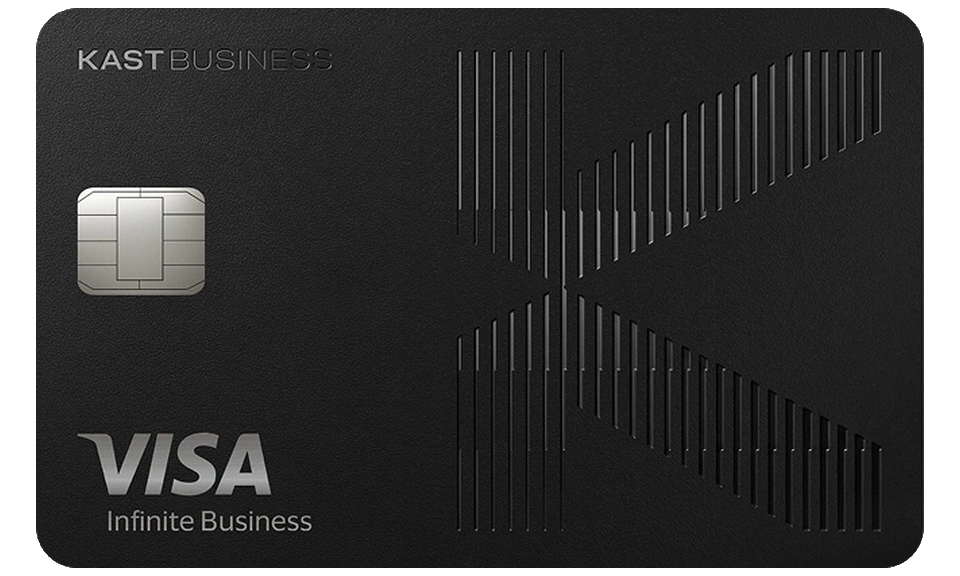
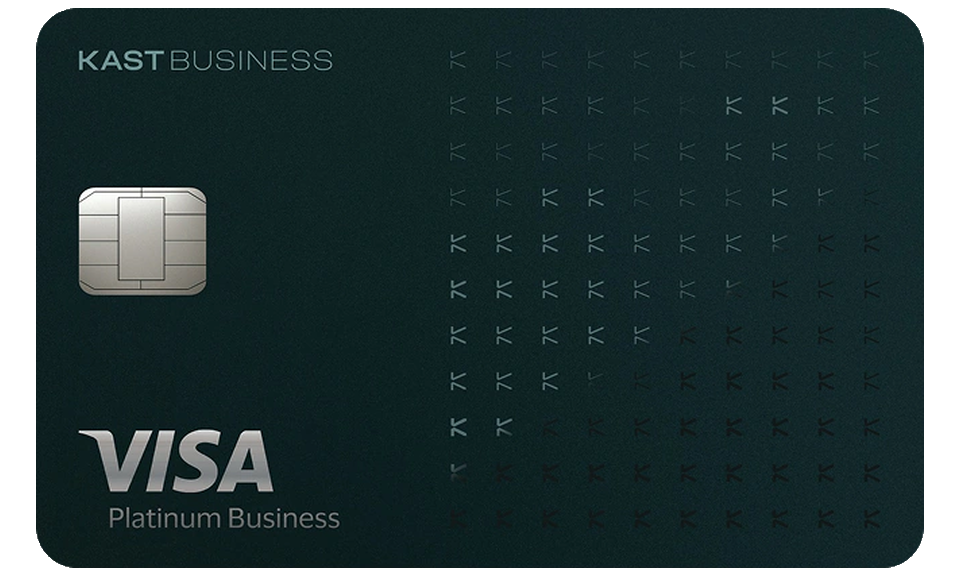
Kast Business Card gives businesses two Visa options: Kast Business Standard Card and Kast Business Global Card. Both offer virtual and physical cards, with USD cashback on eligible spending. Standard pools rewards at company level, so employee purchases contribute to the business’s rewards rather than separate personal balances.
Spending comes from the business balance, with conversion at payment. Teams can set per-card limits and company spending ceilings, block cards instantly and see team transactions in real time. Those controls make the card useful for separating vendor, employee and budget spending.
Both options cover the United States, United Arab Emirates, Brazil, United Kingdom and Australia. Each business account can support up to 500 company and employee cards combined, subject to approval and issuer limits.
Who should choose Standard, and who should reconsider Global
Standard can suit teams whose main goal is earning USD cashback on eligible business purchases while controlling employee spending. No annual subscription and free virtual issuance keep the cost of starting low. Businesses that mainly pay in USD also avoid the non-USD purchase fee.
Global deserves more scrutiny for companies considering it solely for a higher cashback rate. Its $10,000 annual subscription is a fixed upfront cost, while the extra percentage point under the 2027 schedule applies only to the first $1 million of eligible annual spending.
Teams making frequent non-USD purchases should weigh the FX fee against rewards before applying. Businesses that need physical cards for many employees should also budget for issuance rather than treating a free subscription as a cost-free rollout.
Global’s 2027 cashback: the $10,000 fee absorbs the upgrade
From 2027, Global pays 3% on the first $1 million of annual eligible spending. That tier is capped at $30,000 in rewards. Spending above the threshold earns uncapped 2%, matching Standard’s rate rather than extending the extra percentage point.
Consider a business in one of the five supported markets making $1 million of eligible USD purchases in a year under the 2027 schedule. Assume every purchase qualifies for both variants and exclude the 2026 launch offer, physical issuance and other transaction costs. Global earns $30,000, leaving $20,000 after its $10,000 subscription. Standard earns $20,000 without an annual subscription.
Below that threshold, Global’s extra cashback does not cover its annual fee relative to Standard. Above it, both earn 2% on the additional spending, so the cashback advantage does not grow. On this like-for-like calculation, the upgrade reaches parity at $1 million but never pulls ahead on cashback alone.
| 2027 comparison at $1 million eligible USD spending | Standard | Global |
|---|---|---|
| Gross cashback | $20,000 | $30,000 |
| Annual subscription | $0 | $10,000 |
| Cashback after subscription, before other costs | $20,000 | $20,000 |
Cashback conditions and the separate launch offer
Standard earns uncapped 2% cashback in USD on eligible business card spending, pooled at company level. Global’s 2027 schedule combines the capped 3% tier with uncapped 2% above the first $1 million of annual eligible spending. The $30,000 ceiling applies to Global’s 3% tier, not its total annual cashback.
Global excludes government payments, insurance and cash equivalents from cashback. Refunds, chargebacks and disputes can reverse previously earned rewards. Membership cashback cannot stack with another KAST rewards programme on the same transaction.
Global’s Early Access cashback cannot be redeemed until migration and is forfeited on voluntary early exit. A reward balance under those conditions is less useful to a business that needs immediate access to its cashback.
A separate launch offer advertises an additional 1% cashback through the end of 2026. Treat that as a temporary offer when weighing ongoing value; the Global comparison above uses its 2027 schedule.
Kast Business Card fees and card limits
A 0% cross-border fee does not mean every international purchase is free of conversion costs. Both variants charge an FX fee of up to 2% for non-USD purchases. At the maximum rate, that fee can absorb Standard’s 2% base cashback on an eligible purchase.
Virtual issuance is free on both variants. Physical plastic and metal cards carry separate issuance charges, so issuing cards across a large team adds costs even on Standard.
| Charge or limit | Standard | Global | When it applies |
|---|---|---|---|
| Annual subscription | $0 | $10,000 | Global is billed upfront and renews automatically |
| Virtual issuance | $0 | $0 | Issuing a virtual card |
| Plastic card issuance | $40 | $40 | Issuing a physical plastic card |
| Metal card issuance | $200 | $200 | Issuing a metal card |
| Cross-border fee | 0% | 0% | Cross-border purchases; separate FX fees may apply |
| Foreign exchange fee | Up to 2% | Up to 2% | Non-USD purchases |
| Account card limit | Up to 500 combined | Up to 500 combined | Company and employee cards share the account limit; subject to approval and issuer limits |
Verification and commitments to consider
Owners and admins complete full verification, while employees provide basic details. Shareholders with at least 25% ownership and the controlling person verify through KAST Personal. Proof of address is required, and Standard’s business onboarding also requires company documents. Plan for the relevant owners and controllers to participate in setup.
Standard vs Global: which fits your business?
Both variants offer team spending controls, free virtual issuance and the same physical card prices. The decision turns on the subscription commitment and reward conditions, rather than paying more simply to obtain employee cards.
| Variant | Markets | Reader fit | Main trade-off |
|---|---|---|---|
| Kast Business Standard Card | United States, UAE, Brazil, UK and Australia | Teams seeking uncapped 2% USD cashback without an annual subscription | Non-USD FX fees, paid physical cards and beta-service limitations |
| Kast Business Global Card | United States, UAE, Brazil, UK and Australia | Businesses evaluating the 2027 tier against at least $1 million of eligible annual spending | The maximum extra cashback over Standard only offsets the $10,000 annual fee; Early Access restrictions also apply |
Choose around eligible spending and usable rewards
Standard is the more straightforward starting point for teams seeking eligible USD cashback and employee spending controls without an annual subscription. Its appeal weakens when non-USD fees or the cost of physical cards consume the reward value.
For Global, calculate the incremental return against Standard before committing $10,000 upfront. Even at the full 2027 higher-rate allowance, cashback alone only matches the subscription difference. Businesses seeking a cash return above Standard after that fee should choose Standard instead under these assumptions.
Kast Business Card promotions
Launch Bonus
Launch bonus: +1% cashback through the end of 2026.
Kast Business Card FAQ
Is the Kast Business Card worth it?
Standard can be a good fit for teams with eligible USD business spending because it earns uncapped 2% cashback without an annual subscription. Global is less compelling on cashback alone: from 2027, its maximum extra reward over Standard equals its $10,000 annual fee.
What is the difference between Kast Business Standard and Global?
Standard earns uncapped 2% cashback on eligible business spending with no annual subscription. Global charges $10,000 annually and, from 2027, pays 3% on the first $1 million of annual eligible spending, capped at $30,000 for that tier, then uncapped 2%.
What fees does the Kast Business Card charge?
Both variants offer free virtual issuance, charge $40 for a plastic card or $200 for metal, and apply up to 2% in FX fees to non-USD purchases, with a 0% cross-border fee. Standard has no annual subscription; Global costs $10,000 a year upfront and renews automatically.
Which countries is the Kast Business Card available in?
The card’s markets include the United States, United Arab Emirates, Brazil, United Kingdom and Australia. Business verification still applies.
Does the Kast Business Card require KYC?
Owners and admins complete full verification, while employees provide basic details. Shareholders owning at least 25% and the controlling person verify through KAST Personal, and proof of address is required.
How many employee cards can a KAST business account have?
Each business account supports up to 500 cards shared across company and employee cards. Issuance remains subject to approval and issuer limits.