
Best Crypto Cards of September 2026


The best crypto card is the one whose rewards you can actually keep. That means cashback in a stablecoin or bitcoin rather than a thin native token, and a headline rate you can reach without staking thousands of dollars. Where the card holds your money, an exchange balance or a wallet you control, matters just as much.
More about our picks
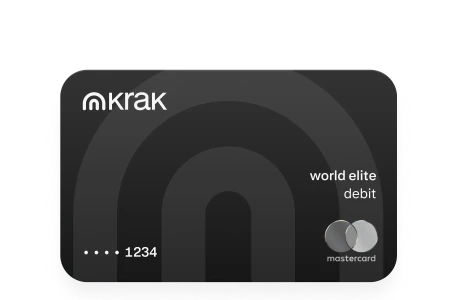
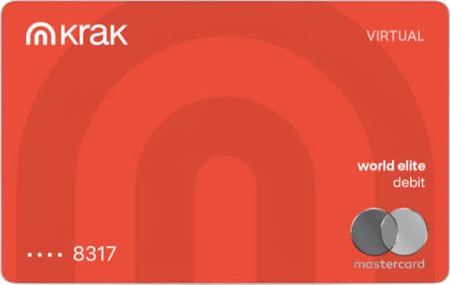
Krak US Card
Our pick for: Eligible U.S. users with Krak and Kraken assets
The Standard Card can be a good fit for eligible U.S. residents who already keep assets across Krak, Kraken, and Kraken Pro and want USD or BTC cashback without a monthly or annual card fee. Its value depends on a rolling 30-day average asset balance, with $50,000 required for the 2% tier. Metal is for the same high-balance group that values Concierge travel rewards. Read our review of the Krak US Card
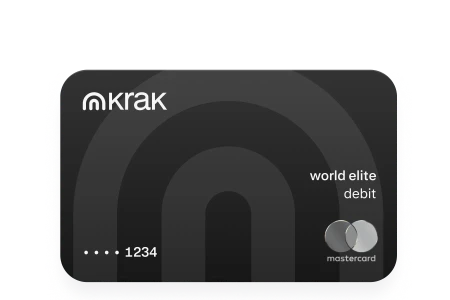
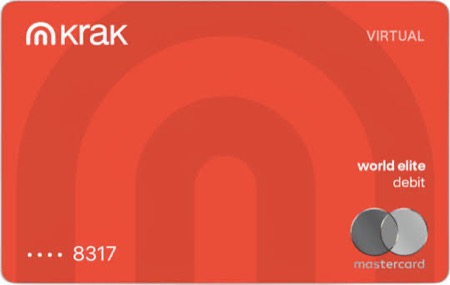
Krak EU Card
Our pick for: Existing Krak and Kraken balance holders
The Krak EU Card can suit EEA residents who already keep assets across Krak, Kraken and Kraken Pro and want a Mastercard debit card without an annual or monthly fee. The Standard card offers the lower-entry route to cashback. Metal makes more sense only for readers already able to meet its €50,000 qualifying balance requirement. Read our review of the Krak EU Card
Coinbase One Card
Our pick for: U.S. Coinbase One members
The Coinbase One Card can suit U.S. Coinbase One members who already keep assets on Coinbase and want Bitcoin rewards on eligible purchases. Its 2% floor is notable, while 2.5% to 4% requires larger Coinbase balances and applies only to the first $10,000 in eligible monthly purchases. It is a harder sell if membership is only for the card. Read our review of the Coinbase One Card
Crypto.com Prepaid Card
Our pick for: Existing Crypto.com users seeking tiered CRO rewards
The Crypto.com prepaid-card range can suit verified Crypto.com users who already value CRO rewards and can meet the paid subscription or CRO lockup route available in their country. Ruby Steel is the lower-entry reward tier, while Jade, Icy, Rose and Obsidian add higher potential rewards and travel benefits. The key trade-off is that rates, caps, lockup values and charges are not uniform across markets. Read our review of the Crypto.com Prepaid Card
Coinbase Debit Card
Our pick for: Eligible U.S. Coinbase users seeking flexible crypto rewards
The Coinbase Debit Card can suit eligible U.S. Coinbase users who want to earn crypto on purchases without a listed Coinbase annual or monthly card fee. It is more useful for readers who will check the current in-app reward offer before spending, because both the rate and reward choices can change. Read our review of the Coinbase Debit Card
How crypto cards work
A crypto card is a Visa or Mastercard funded from a crypto balance instead of a bank account. You tap it, swipe it, or use it online exactly like any other card. Behind the scenes, the issuer converts your balance to fiat the moment you spend, instantly on a debit or prepaid card, or against a credit line on the rare true credit product. The network accepts the card wherever Visa or Mastercard is accepted, well over 100 million merchants worldwide.
Custodial vs. self-custodial cards
Most crypto cards are custodial: the issuer holds your balance, decides what you can spend, and can freeze the account. That buys convenience, you never touch a seed phrase, but it also means you carry counterparty risk if the issuer runs into trouble. A self-custodial card spends straight from a wallet you control, usually a smart-contract wallet on-chain, so the issuer never holds your funds at all. Fewer than a dozen self-custodial cards exist today and setup takes more effort than a custodial one. See our self-custody picks.
How rewards work: cashback, bitcoin-back and stablecoin-back
Rewards come in three flavors. Cashback in the issuer's own token is the most common and the least reliable: the token can lose value faster than the reward accrues, and the highest rates usually require staking thousands of dollars of that same token. Bitcoin-back and stablecoin-back cards pay in an asset you likely already want to hold, at a lower headline rate you can actually count on. Compare the effective rate at your real stake level, not the number on the landing page.
How EchoTerminal rates crypto cards
Every card here carries an EchoTerminal Score from 0.0 to 5.0, not a star rating pulled from user reviews. We score a card's documented terms, rewards, fees, everyday usability, market availability, eligibility requirements, and limits, against a fixed methodology applied the same way to every card, with rewards and fees weighted most heavily. Only terms we can trace to the issuer's own documentation count: we never guess at missing information or treat it as a negative, and no issuer can pay for a better score. Read the full methodology →
What to compare when choosing a crypto card
- Monthly or annual fee
- Many cards charge nothing; premium tiers can run $10 to $15 a month.
- Effective cashback rate
- The rate at your real stake level, not the advertised maximum.
- Reward currency
- A stablecoin, bitcoin, or the issuer's own token.
- Custody model
- Custodial, the issuer holds your funds, or self-custodial, you hold the wallet.
- KYC level
- None, email-only, or full identity verification.
- Country availability
- Many cards exclude the US, the UK, or specific states.
- ATM and FX
- The free withdrawal allowance and the conversion spread on foreign spending.
- Card type
- Physical, virtual, or both.
Do you need more than one crypto card?
There is no fixed number. Most people are well served by one card that matches their main spending pattern. A second card earns its place in two situations: you want a self-custodial backup in case your main custodial issuer ever restricts your account, or you spend meaningfully in more than one currency or region and no single card covers both well. Holding a second card also limits your exposure if one issuer freezes an account or shuts down, the same reasoning behind not keeping all your crypto on one exchange. Past two, tracking fees and rewards across cards usually costs more attention than it earns back.
Crypto cards FAQ
What is the best crypto card?
There is no single best crypto card. It depends on where you live, how much you spend, and whether you want rewards in a stablecoin or the issuer's own token. Compare the effective cashback rate at a realistic stake level, the total annual fee, ATM limits, and regional availability.
Are crypto cards worth it?
For regular spenders in a supported country, a low-fee card that pays cashback in a stable asset can be worth it. The main drawbacks are that every purchase from a crypto balance is a taxable disposal, and that headline reward rates often require locking up a volatile token.
How does EchoTerminal rank crypto cards?
Each card is scored with the same fixed methodology (six weighted dimensions: rewards, fees, usability, availability, eligibility, and limits) using the issuer's own published terms. Rankings update as terms change. Sponsored placements are labelled and never affect the score.
About the author
SuriyanandanCo-founder & Crypto Quant Analyst
Suriyanandan is co-founder of EchoTerminal and a crypto quant analyst. Before EchoTerminal he built trading systems and algorithmic strategies across DeFi and CeFi markets at 2 Cents Capital. He reviews crypto cards the same way he approached trades, turning fee schedules, staking tiers and reward structures into the effective return for a real spending profile.
See full bio →About the reviewer
Antony KingsCo-founder of EchoTerminal | Crypto card researcher
Antony Kings is the co-founder of EchoTerminal, where he covers crypto cards and personal finance. With five years of experience in Web3 markets, he helps readers make clearer decisions about how they spend, earn and use crypto in everyday life.
See full bio →Editorial independence
Every card on this page is scored against the same fixed methodology by a named analyst, checked line by line against the issuer's own application and pricing pages. A card's rating, ranking, and "pros and cons" are never changed by a commercial relationship, and no issuer can pay for a better score. Our opinions are our own.
Advertiser disclosure
You come first. Every time.
We believe everyone should be able to compare crypto cards with confidence. While we don't cover every card on the market, we work hard to show a wide range of issuers alongside honest, independent analysis.
So how do we make money? Some issuers pay us when you apply through our links, and in some cases applying through our link also gets you a bonus or better terms than applying directly; we note this on the card's own page whenever it's current and verified. It never changes a card's rating, ranking, or verdict. No issuer can pay us for a better score.